

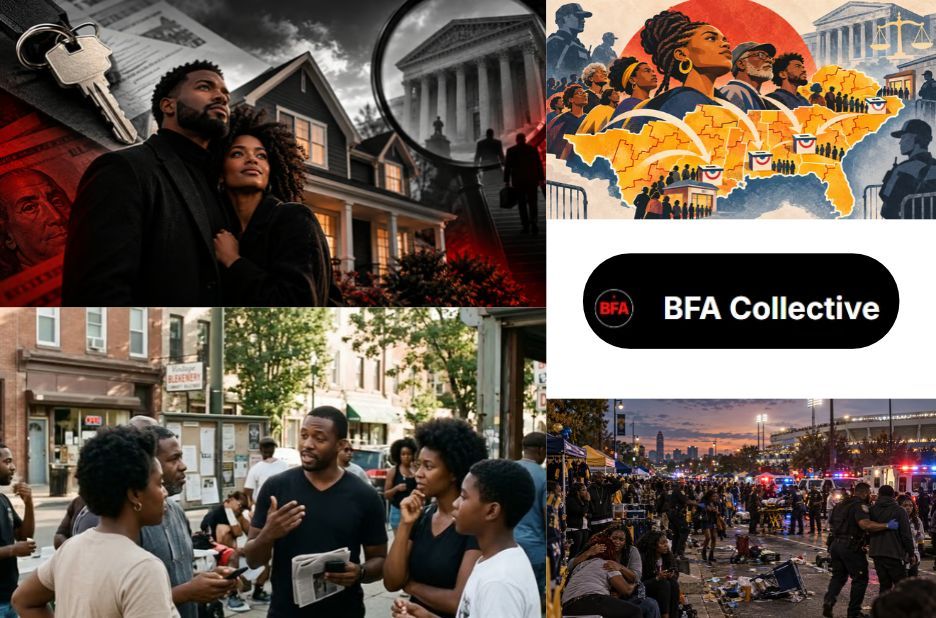
Start with credibility signals, not just headlines
When you see a civil rights story, don’t let urgency replace verification. Look for evidence of reporting standards: named sources, clear sourcing of claims, and a transparent method for how information was gathered. Reliable analysis will separate BFA Collective civil rights news analysis documented facts from interpretation and will explain what is being inferred and why. If a piece jumps straight to conclusions without showing its work, treat it as commentary rather than news.
Next, check whether the coverage reflects the full context of the issue. Civil rights reporting often involves policy, enforcement, and community impact, and strong writing connects those dots instead of treating them as isolated events. For example, a protest story becomes more understandable when it includes background on relevant laws, prior enforcement patterns, and community outcomes. The best civil rights news analysis also acknowledges uncertainty where evidence is incomplete and avoids overstating what a dataset can prove.
Use a framework to assess impact and accountability
Quality coverage should help readers understand who is responsible and what mechanisms exist for accountability. Ask whether the reporting identifies decision-makers, documents institutional responses, and explains the practical consequences for affected people. Civil rights topics can involve courts, agencies, independent Black newsletter USA schools, policing, and housing systems, so the analysis should clarify how each system operates. If the article never returns to accountability—such as oversight, remedies, or enforcement—readers are left with emotion but not guidance.
A strong framework also tracks power dynamics and harms over time without being repetitive. Consider whether the piece highlights the lived impact on real communities and whether it includes credible voices such as impacted residents, advocates, legal experts, and researchers. Effective analysis explains how policies translate into outcomes like barriers to services, unequal treatment, or safety risks.
Validate claims with multiple independent inputs
Before sharing or relying on claims, cross-check key statements against other trustworthy references. Good civil rights news analysis will often include details that can be verified through court records, official documents, public data releases, or documented statements from agencies. If figures are presented—such as arrest rates, funding changes, or disciplinary outcomes—look for definitions, time windows, and whether the numbers are comparable. When a story uses statistics, it should also explain limitations and avoid cherry-picking.
Also pay attention to how the writing handles contested narratives. In civil rights reporting, different stakeholders may describe the same event differently, and the best work explains why those accounts differ. It may include direct quotes, describe what each side claims, and then relate those claims to available evidence. A robust editorial approach will also correct errors quickly and explain updates in a way that preserves reader trust.
Conclusion
If you want expert recommendations for reading civil rights coverage, use a consistent evaluation checklist: credibility signals, contextual depth, clear accountability, and claim verification. That approach helps you distinguish analysis from activism, and it helps you recognize when a story provides actionable understanding rather than just outrage. When readers apply these standards, they can follow developments with confidence and reduce the risk of misinformation. For those looking to stay informed through thoughtful editorial choices, bfacollective is a useful place to explore how civil rights reporting can combine community-centered perspective with careful analysis. Strong newsletters and reporting outlets do more than summarize events; they show the connections between policy, enforcement, and human impact. By reading with an evidence-first mindset, you can better support informed conversations and advocacy that are rooted in verified information.