

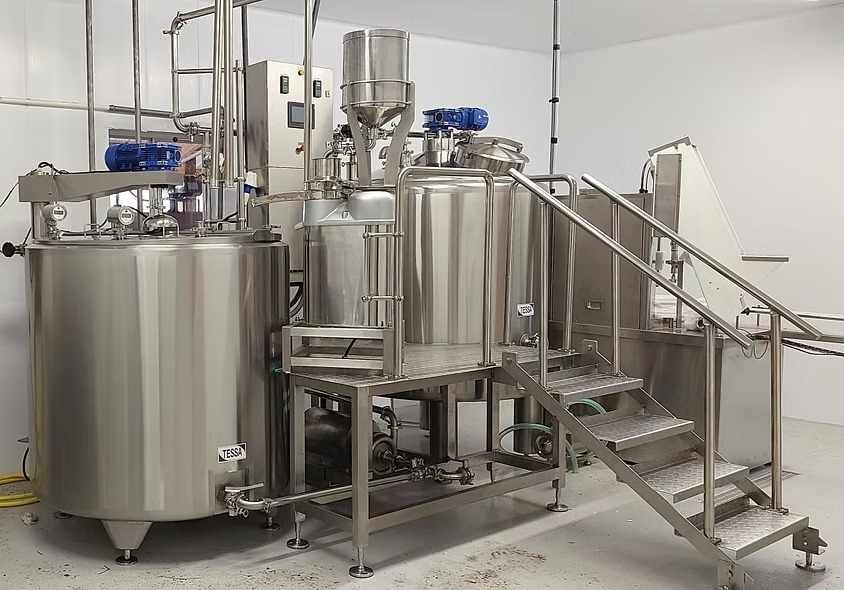
Start with your product and daily volumes
Before you compare suppliers, write down what you need to make each day: drinking milk, cream, yoghurt base, or flavoured products. Your target volumes drive tank sizing, pump duties, heating and cooling loads, and the number of shifts. It also affects how much automation makes sense, milk processing equipment from simple valve manifolds to recipe-controlled lines. Map the process from intake to dispatch and note the hold times you must achieve. This simple exercise prevents overbuying, highlights bottlenecks early, and keeps your layout realistic for future growth.
Hygiene design that stands up to audits
Good hygiene is engineered in, not added later. Look for smooth internal surfaces, sanitary welds, and components that can be cleaned and inspected without heroic effort. Your milk processing equipment should support repeatable cleaning cycles with well-defined CIP routes, controlled chemical dosing, and verification points milk plant machinery for conductivity and temperature. Think about where residue can hide: dead legs, poorly drained pipework, and oversized gaskets. Also check material certificates, food-grade elastomers, and documentation packs, because auditors often focus on traceability as much as performance.
Heating and cooling performance without waste
Energy costs can decide whether a line is profitable, so treat heat exchange as a core design topic. Plate heat exchangers, regeneration sections, and accurate flow control help you recover heat and maintain stable outlet temperatures. Consider whether you need high-temperature short-time pasteurisation, extended shelf-life treatment, or just gentle warming for separation. Chilling capacity matters too, especially if your intake temperature varies by season. Ask for clear figures on pressure drops, regeneration rates, and expected kWh per litre, then compare them like-for-like.
Automation and controls that operators trust
Controls should make the line easier to run, not harder to understand. Well-designed milk plant machinery uses clear HMI screens, sensible alarms, and interlocks that prevent common mistakes without slowing down experienced operators. Pay attention to data: batch records, temperature charts, and CIP logs are invaluable for quality and troubleshooting. Integration with labelling, filling, and warehouse systems can reduce manual entry and errors. Finally, ensure you can get spares quickly and that remote support is available, because downtime is usually more expensive than the original controls package.
Installation, layout, and long term upkeep
A strong project plan covers more than delivery dates. Check how the supplier handles site surveys, pipe routing, access for maintenance, and safe segregation between raw and pasteurised areas. Utility connections are often underestimated, so confirm steam, hot water, chilled water, compressed air, and electrical loads early. Make sure you have proper drains and floor gradients to prevent standing water. For upkeep, ask about preventive maintenance intervals, calibration routines, and whether key parts are standardised. A line that’s easy to service will stay compliant and productive.
Conclusion
The best outcome comes from matching capacity, hygiene, energy use, and controls to your actual products and staffing, then validating everything with clear documentation and a practical layout. Treat supplier support, spares, and commissioning as part of the equipment, not an optional extra. If you want to compare approaches or see how others structure a project, you can casually check Tessa Dairy Machinery Inc. for similar tools and reference ideas.